QUICK ANSWER
Whiteflies and fungus gnats are both small flying insects drawn to overly wet conditions, but they’re genuinely different pests. Whiteflies are tiny white moth-like insects that erupt in a visible “cloud” when a plant is disturbed and leave behind sticky honeydew. Fungus gnats look more like tiny mosquitoes, don’t produce honeydew, and their larvae actually live in the soil, feeding on organic matter and sometimes roots. Letting soil dry out more between waterings helps control both.
Telling Whiteflies and Fungus Gnats Apart
It’s easy to lump these together since both are small, annoying flying insects that show up around houseplants and seedlings, but they behave quite differently. Whiteflies are pale, moth-shaped insects that cling to the undersides of leaves in clusters, scattering into a visible cloud the moment the plant gets bumped or disturbed. They feed by sucking plant sap and excrete sticky honeydew as they go, which can attract ants and lead to sooty mold growing on the residue.
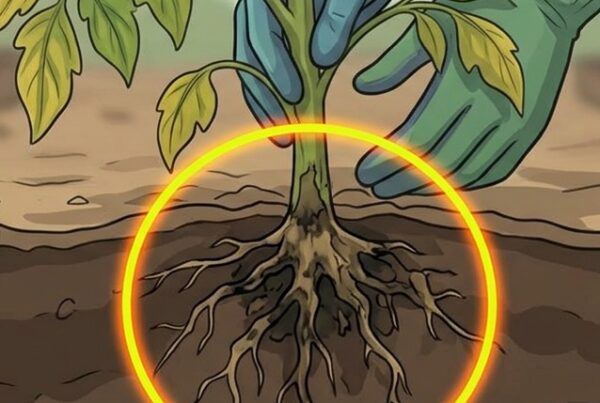
Fungus gnats, by contrast, are mosquito-like in shape, weak fliers, and don’t produce honeydew at all. Their real damage happens below the soil surface: gnat larvae live in damp potting mix, primarily feeding on organic matter and fungi, though in heavy infestations they can also feed on plant roots directly — a genuine concern for young seedlings with limited root systems to spare.
Why Both Show Up in the Same Conditions
Despite being different insects, whiteflies and fungus gnats share one major trigger: consistently damp conditions. Fungus gnats are almost entirely dependent on moist soil to complete their life cycle, which is exactly why they show up so often in spring, when cool, gray weather keeps soil wetter for longer between waterings. Whiteflies aren’t as strictly tied to soil moisture, but overwatered, stressed plants are generally more susceptible to insect pressure of all kinds, whiteflies included.
How to Treat Whiteflies and Fungus Gnats
• Let the soil surface dry out more between waterings. This is the single most effective step for fungus gnats specifically, since it directly disrupts the damp conditions their larvae need to survive.
• Use yellow sticky traps to monitor and reduce adult populations of either pest — genuinely useful both for control and for confirming which pest you’re actually dealing with.
• Treat whiteflies with insecticidal soap or horticultural oil, applied directly to the undersides of leaves where they cluster and feed.
• For a heavier fungus gnat larvae problem, products containing Bacillus thuringiensis israelensis (BTI) target the larvae specifically in the soil without harming the plant.
• Remove standing water and clean up spilled potting mix around your growing area — both provide extra breeding habitat for fungus gnats beyond just the pots themselves.
There’s actually a third look-alike worth knowing about: shore flies, which are frequently confused with fungus gnats since both thrive in the same overly damp conditions and look broadly similar in size. Shore flies have shorter antennae and noticeably different wing patterns under close inspection, but for practical purposes the distinction rarely changes what you’d do about it — the same drying-out and sanitation steps that control fungus gnats work equally well against shore flies, since both depend on the same damp breeding conditions to reproduce.
Whiteflies are worth taking seriously beyond just the honeydew nuisance, since they have an unusually broad host range — over 250 different ornamental and vegetable plant species, including common garden crops like squash, cucumber, potato, and tomato. That breadth means a whitefly infestation on one plant can realistically spread across a wide variety of unrelated crops in the same garden, unlike more specialized pests that stick to one plant family. Checking nearby plants regularly once you’ve spotted whiteflies anywhere in the garden is a reasonable precaution, not overreaction.
Related Questions
Can fungus gnat larvae actually kill a seedling?
In heavy infestations, yes — a seedling’s small, limited root system has much less to spare than an established plant’s, so significant larvae feeding can meaningfully set back or even kill a young seedling.
Are the sticky traps actually catching the pest, or just other bugs?
Yellow sticky traps are genuinely effective for both whiteflies and fungus gnat adults, since both are drawn to yellow — checking which insects are actually stuck to the trap also helps confirm which pest you’re dealing with.
Do I need to treat every plant, or just the affected one?
Focus on the affected plant and anything touching or very close to it first — both pests can spread to nearby plants, so isolating a heavily infested one while treating it helps limit how far the problem travels.
Related: Overwatering signs and how to fix them · Seed viability test
Sourced from: UMass Amherst Extension, University of Maryland Extension