QUICK ANSWER
Small fruit nutrients almost always come down to one in particular: potassium. When plants can’t access enough potassium during flowering and fruit set, fruit stays undersized even though the plant otherwise looks healthy. The tricky part is that this can happen even in soil that tests fine for potassium overall, since uptake — not just the raw amount present — is often the real bottleneck.
Why Potassium Is the Small Fruit Nutrient to Check First
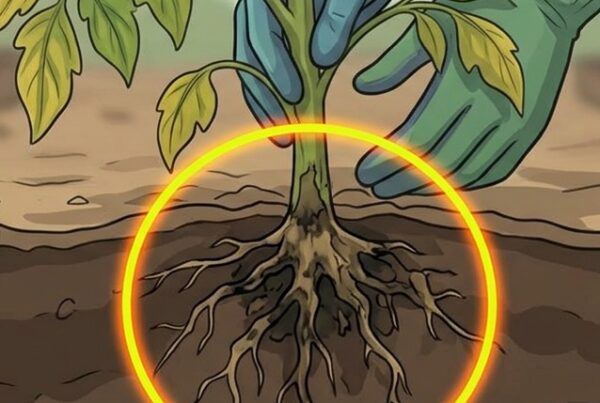
Potassium plays a central role in how a plant fills out and sizes its fruit, and demand for it spikes dramatically right around flowering and into fruit set — this is exactly the window where a shortfall does the most visible damage. Unlike nitrogen, which moves through soil relatively easily via mass flow with water, potassium reaches roots mainly through diffusion, a much slower process. That difference matters: it means potassium can be genuinely present in the soil while still not reaching the plant fast enough to meet peak demand during fruiting.
This is why potassium deficiency sometimes shows up even in soil that tests adequate or high for potassium overall — the problem isn’t always a true shortage in the ground, but a mismatch between how quickly the plant needs it and how quickly it can actually reach the roots. Sandy soils compound this further, since potassium leaches out of coarse, fast-draining soil more readily than it does from soil with more clay or organic matter to hold onto it.
Other Small Fruit Nutrients Worth Ruling Out
While potassium is the primary suspect, it’s not the only nutrient that can affect fruit size. Phosphorus supports early root and flower development, and a shortfall earlier in the season can set fruit up to be smaller regardless of potassium levels later on. Calcium and magnesium both play supporting roles in overall fruit development too, though they’re more commonly associated with other specific symptoms — calcium with blossom end rot, magnesium with interveinal yellowing — rather than undersized fruit as the primary sign.
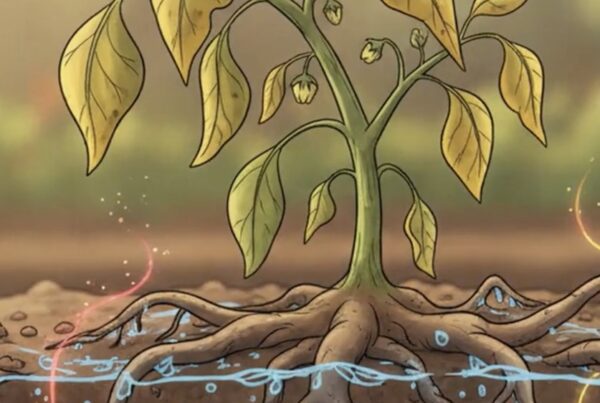
Small fruit rarely shows up completely alone when potassium is the real culprit — a few companion symptoms tend to appear alongside it. Leaf cupping or puckering, along with a slight yellowing or browning right at the leaf margins, are classic potassium deficiency signs, and like nitrogen, potassium is mobile within the plant, so these symptoms typically show up on older, lower leaves first. Uneven fruit ripening and irregular texture inside the fruit itself are also commonly reported alongside undersized fruit when potassium is the underlying issue.
How to Fix It This Week
• Switch to a fruiting-formula fertilizer with a higher potassium ratio once flowering begins — this is the single most direct fix, timed to match when the plant actually needs it most.
• Consider a soil test before adding more, especially if you’ve already been fertilizing regularly — if potassium levels are actually fine, the real issue may be uptake, root health, or soil moisture consistency rather than raw nutrient availability.
• Wood ash is a legitimate organic potassium source if you have access to it, particularly useful on acidic soils that are naturally low in potassium — apply evenly and work it into the soil surface rather than leaving it in a concentrated pile.
• Keep watering consistent during fruit set. Since potassium moves through soil more slowly than other nutrients, inconsistent soil moisture makes it even harder for the plant to access what’s already there, compounding the shortfall rather than helping it.
If you’re growing several different fruiting crops in the same bed and only some show undersized fruit, that’s actually a useful clue. Heavy feeders like tomatoes and peppers pull more potassium from the same soil than lighter feeders growing nearby, so uneven fruit sizing across different crops often points toward a real supply-and-demand imbalance rather than a uniform soil deficiency affecting everything equally.
Related Questions
Is this the same as blossom end rot?
No — blossom end rot is specifically a calcium and watering-consistency issue causing a dark, sunken spot, while undersized fruit from potassium shortfall doesn’t typically show that specific symptom, and often comes with leaf cupping instead.
How much wood ash is too much?
Wood ash also raises soil pH, so applying too much can push acidic soil toward alkaline over time — a light, even application worked into the surface is safer than heavy repeated use without checking pH periodically.
Should I fertilize with potassium all season, or just at flowering?
Demand spikes specifically around flowering and fruit set, so that’s the most impactful timing — heavy potassium feeding earlier in the season, during purely vegetative growth, isn’t as necessary and won’t prevent a later shortfall the same way.