QUICK ANSWER
September garden keep producing after summer crops fade? Yes — in two different ways at once: healthy warm-season plants like tomatoes, peppers, and eggplant often keep fruiting right up until frost without needing to be replanted, while fresh plantings of cool-season crops like spinach, radishes, and kale go in now for a genuine fall harvest. Which approach applies depends on what’s already growing and how far you are from your first frost.
How a September Garden Keep Producing Works: What’s Already There
It’s easy to assume September means winding down, but many warm-season crops simply keep going if the plants are still healthy. Tomatoes, peppers, eggplant, and okra will often continue producing right through September without needing to be replanted at all — as long as the plants haven’t already declined in quality or vigor. If they have, that’s actually useful information: it may be worth a fresh, fast-maturing round of the same crop rather than counting on tired plants to carry through to frost.
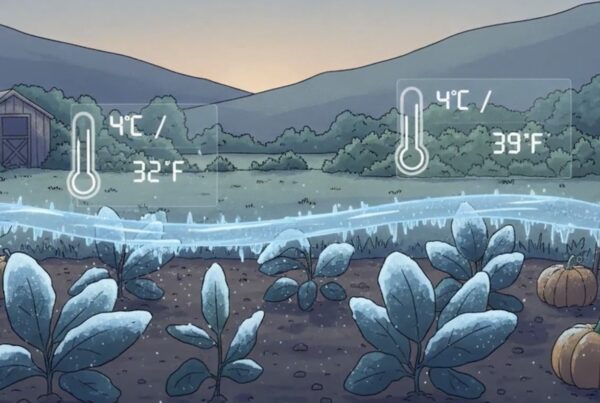
Warm-season crops do have a hard stop, though: they can’t tolerate temperatures at or below 32°F. Once a real frost is close, it’s worth checking your expected first frost date and planning around it rather than assuming the season will simply continue.
The Second Way: Fresh Cool-Season Plantings
September is also genuinely good timing to plant an entirely new round of cool-season crops — spinach, radishes, kale, turnips, beets, arugula, and lettuce all do well started now, since they actually prefer the cooling temperatures ahead rather than fighting against them the way they would in spring heat. Several of these tolerate a light frost without issue, and some — kale among them — genuinely taste better once temperatures drop.
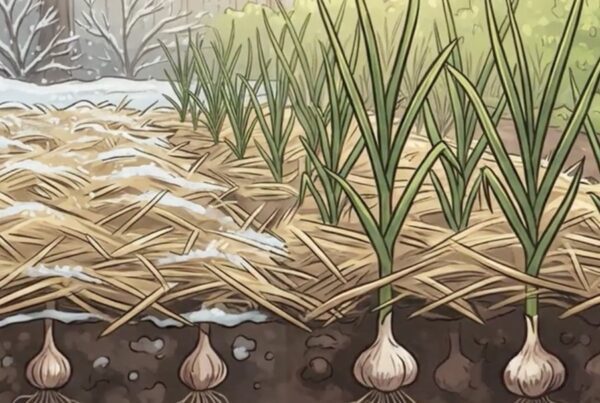
Garlic is worth calling out as its own special case: planted in September, it doesn’t mature until the following July, using the fall and winter as a long, slow head start rather than producing anything this season at all.
How to Actually Time It
• Check your first frost date before committing to a fall planting — count backward from that date using each crop’s days-to-maturity to confirm there’s genuinely enough time left.
• Use succession planting for a steady harvest rather than one big flush — sow a small round of something like lettuce or radishes, then repeat every two to three weeks for continuous fresh harvests instead of everything ripening at once.
• Clear and refresh soil before replanting where a spent crop is coming out — remove old plant material and work in some balanced fertilizer to replace what the previous planting used up.
• Be honest about which warm-season plants are worth keeping. A tired, declining tomato plant producing poor-quality fruit is often better replaced with a fast-maturing round of something new than left to limp toward frost.
Frost tolerance genuinely varies a lot even within the cool-season group, which is worth knowing before you assume every fall crop behaves the same way. Spinach and kale handle real cold with ease and can keep producing through repeated light frosts, sometimes even improving in flavor as temperatures drop. Lettuce is more moderate — it tolerates a light frost but can be damaged by anything harder. Root crops like radishes and turnips generally hold up well underground even as the tops show some frost damage, since the part you’re actually harvesting is insulated by soil.
This matters for planning your September plantings strategically: if you’re working with a shorter window before a harder freeze typically arrives in your area, prioritizing the most cold-hardy options gives you the best odds of an actual harvest, while saving the more frost-sensitive choices for years when your first hard freeze runs later than usual.
Related Questions
Will cool-season crops planted in September actually mature before frost?
Many will, especially fast-maturing options like radishes and loose-leaf lettuce — check days-to-maturity on the seed packet and count backward from your first frost date to confirm before planting.
Do I need to protect fall crops from an early frost?
Cool-season crops tolerate a light frost without protection, but a cold frame, row cover, or cloche can extend the harvest further if a harder freeze arrives before the crop is finished producing.
Is it too late to plant warm-season vegetables in September?
Generally yes, in most regions — warm-season crops need too long to mature and can’t tolerate the frost that’s typically approaching by this point. September is really the cool-season crops’ moment instead.