QUICK ANSWER
Leggy seedlings are one of the most common problems new seed-starters run into, and the fix always comes back to light. Thin, pale, stretched-out seedlings reaching toward one direction almost always mean the plant is chasing more light. Leggy growth can’t be reversed on the stem that’s already grown, but you can stop it from getting worse and set future seedlings up better.
Why this Happens
Seedlings grow toward the strongest available light source. When light is too dim, too far away, or coming from only one direction (like a single window), the plant stretches its stem upward and sideways trying to reach more of it — producing that thin, weak, “leggy” look with pale color and wide gaps between leaves. It’s the plant’s normal survival response to insufficient light, not a disease or nutrient issue.
Once a stem has stretched, that growth pattern is permanent — the existing stretched portion won’t shorten or thicken back up. The goal from here is stopping further stretching and supporting the plant through it.
What Causes Leggy Seedlings in the First Place
Plants grow toward light through a response called phototropism, and when the light hitting a seedling is too weak, too far away, or coming from a single direction, the plant’s cells on the shaded side elongate faster than the cells facing the light. That uneven growth is what produces the thin, stretched stem and the wide gaps between leaves that gardeners call legginess.
Intensity and duration both matter. A spot that looks bright to your eyes, like a few feet back from a window, often delivers only a fraction of the light a seedling actually needs to grow compact and sturdy. Most seed-starting guides recommend keeping grow lights on for 14 to 16 hours a day at minimum, since even strong light for a short window still leaves seedlings reaching. Seedlings started in a dim room or on a cloudy windowsill almost always show leggy seedlings symptoms within the first two weeks, well before the plant shows any other signs of stress.
How to Fix It This Week
• Move seedlings to the brightest available spot immediately — a south-facing window is a minimum; a grow light positioned 2-3 inches above the seedlings (raised as they grow) is far more reliable.
• Run grow lights 14-16 hours a day if using them, since natural window light alone is often not intense enough even in a bright spot.
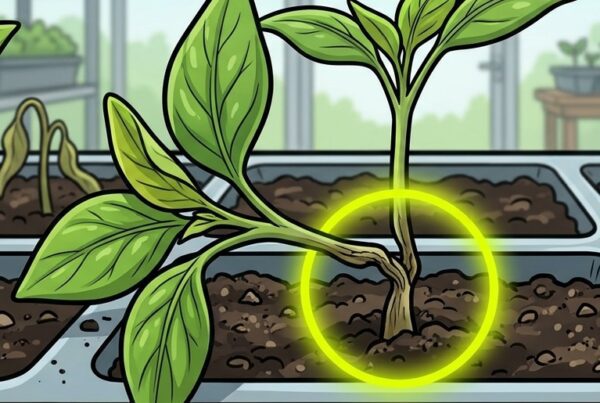
• Bury the stem slightly deeper when transplanting (for plants that tolerate it, like tomatoes) — this can help support an already-leggy stem, since roots will form along the buried portion.
• Add gentle air movement (a small fan on low, a few times a day) — this encourages sturdier stem growth, not just taller growth.
• For next batch of seedlings, start with strong light from day one rather than correcting after the fact.
Can Leggy Seedlings Still Be Saved?
Not every leggy stem is a lost cause, and the right response depends on how far the stretching has gone. A seedling that’s a little pale and slightly elongated but still standing upright on its own will usually recover its color and vigor once it’s moved under stronger, closer light, since you’re just correcting the cause before it gets worse. A seedling that’s flopping over, with a thin, almost translucent stem that can’t support its own leaves, has stretched past the point where light alone fixes it; that one needs the support of a deeper planting hole or a stake, in addition to better light going forward.
Tomatoes and other vining crops tolerate this kind of rescue well because they readily grow new roots along a buried stem, so burying a leggy tomato seedling up to its first set of true leaves at transplant time is a standard, low-risk fix. Seedlings that can’t root from the stem, like most brassicas and lettuces, don’t have that option, so prevention through adequate light from the start matters even more for those crops.
Related Questions
Will leggy seedlings recover once transplanted outside?
Partially — stronger outdoor light and wind will help the plant grow sturdier from that point forward, but the already-stretched portion of the stem stays as it is.
Should I just throw out leggy seedlings and start over?
Not necessarily — many leggy seedlings (especially tomatoes) can be planted deep enough to bury the weak stem and still produce a healthy plant. It depends how severe the stretching is and how much growing season is left.
Does this happen with all seedlings the same way?
The tendency is universal, but severity varies by plant — fast-growing, light-hungry seedlings like tomatoes stretch more noticeably and quickly than slower growers.