QUICK ANSWER
Soil that never seems to dry out and mushy, dark roots underneath both point to drainage that isn’t keeping up with watering — not simply “too much water.” The distinction matters, because the fix is different: improving how water moves through the soil, not just watering less.
Why this Happens
There’s an important difference between overwatering and poor drainage, even though they can look similar. Overwatering means you’re adding more water than the plant needs on a schedule that’s too frequent. Poor drainage means the water has nowhere to go once it’s there — heavy clay soil, compacted ground, or a container/raised bed without adequate drainage holes can all trap water
regardless of how carefully you’re watering. In a true drainage problem, even a “normal” watering amount ends up sitting in the root zone far longer than it should.
This matters because roots need both water and air. When soil stays saturated, the air spaces between soil particles fill with water instead, and roots can effectively suffocate — showing up as the same kind of stress symptoms as overwatering, but caused by the soil’s structure rather than your watering habits.
How to Fix It This Week
• Check the actual cause first — dig down a few inches after watering. If it’s genuinely still soggy a day or more later, that’s drainage, not frequency.
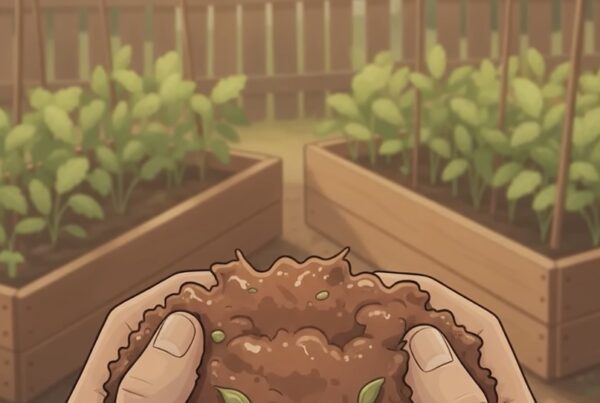
• Amend heavy soil with compost or coarse material (like perlite or coarse sand) to improve structure and create better air/water passages.
• Move to a raised bed or pot with real drainage holes if the underlying ground or container simply can’t be improved enough in place.
• Avoid the instinct to just water less if it’s truly a drainage issue — reducing watering doesn’t fix trapped water, it just delays the same problem.
Related Questions
How is this different from overwatering?
Overwatering is about how much and how often you’re adding water; poor drainage is about the soil’s inability to let that water move through and away from roots. The fixes are different — water less for overwatering, improve soil structure for drainage.
Can raised beds still have drainage problems?
Yes, if the underlying ground beneath the bed is heavy clay or compacted, water can back up into the bed from below even with good soil on top — checking the base, not just the surface mix, matters.
Will adding sand fix clay soil drainage?
Not on its own, and in some cases it can make things worse by creating a cement-like texture when mixed improperly with clay. Compost and organic matter are generally safer, more reliable amendments for improving structure.
Related: Sandy soil fixes · Root rot signs and treatment · Raised Beds & Soil guide