QUICK ANSWER
Garden soil too acidic for most vegetables — generally below pH 6.0 — causes key nutrients to become chemically locked up and unavailable, even when they’re already present in the soil. The result looks like a nutrient deficiency (yellowing, stunted growth, poor root health) but more fertilizer won’t fix it, since the real problem is pH, not a lack of nutrition.
Why Garden Soil Too Acidic Causes Nutrient Lockout
Most vegetables do best in soil that’s slightly acidic to neutral — roughly pH 6.0 to 7.0. That range isn’t arbitrary: it’s the sweet spot where the widest range of nutrients stays chemically available for roots to actually absorb. Drop below pH 6.0, and garden soil too acidic for that range starts locking up nitrogen, phosphorus, and potassium; drop below 5.0, and calcium and magnesium become unavailable too, even in soil that’s otherwise well-fertilized.
This is the part that trips people up: a nutrient lockout problem looks identical to an actual nutrient deficiency from the outside. Yellowing leaves, stunted growth, poor fruit set — all the same symptoms you’d see if the nutrients genuinely weren’t there. The difference matters because the fix is completely different. Adding more fertilizer to soil that’s already too acidic doesn’t help, since the new nutrients get locked up the same way the existing ones already are.
What Garden Soil Too Acidic Actually Looks Like
A few signs point specifically toward pH rather than a simple feeding problem:
• Interveinal yellowing — leaves paling between the veins while the veins stay green — often shows up as magnesium becomes harder to access.
• Stunted growth with a purple tinge to stems or leaf undersides can signal phosphorus lockout, which happens at both very low and very high pH.
• Roots that look dark, black, or mushy rather than healthy white or tan, since acidic conditions can damage root tissue directly and make it more prone to rot.
• Moss spreading across bare soil or bed edges is a genuinely useful visual clue, since moss specifically favors acidic conditions most garden vegetables can’t tolerate.
How to Fix Overly Acidic Soil
• Test before adding anything. A real pH number tells you how much correction you actually need — guessing risks over-correcting in the opposite direction.
• Apply agricultural lime to raise pH — dolomitic lime is a common choice since it adds magnesium along with the pH correction, useful if a soil test shows that’s also short.
• Correct pH gradually, not all at once. A staged approach over one to two seasons avoids over-liming, which creates its own lockout problem by pushing iron, zinc, and manganese out of reach in the opposite direction.
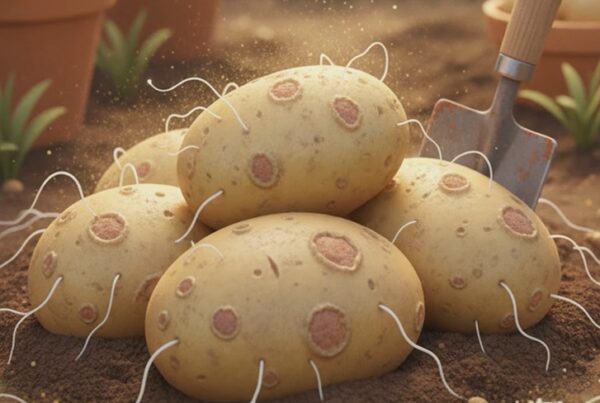
• Remember a few crops actually prefer more acidic soil — potatoes tolerate acidic conditions well (it even helps suppress potato scab), so don’t treat every acidic reading as automatically a problem needing correction for every part of the garden.
Why Some Gardens Start Out More Acidic Than Others
Naturally acidic soil isn’t random — it’s strongly tied to regional climate and geology. Areas with heavy rainfall tend to have more acidic native soil, since water gradually washes calcium and magnesium out of the topsoil over time, leaving it more acidic than drier regions ever become. Soils formed from certain parent rock, like granite or sandstone, also trend more acidic than soils formed from limestone-based rock, which naturally buffers pH upward instead.
This is worth knowing because it means correcting soil pH usually isn’t a one-time fix in naturally acidic regions — rainfall keeps gradually pulling pH back down over the following seasons, which is exactly why a yearly retest matters more in a wet climate than it does somewhere naturally drier and less prone to drift.
Related Questions
Is too-acidic soil the same problem as too-alkaline soil?
No — they’re opposite problems that happen to cause similar-looking symptoms. Too acidic locks up nitrogen, phosphorus, and calcium; too alkaline locks up iron and manganese instead, which is exactly what happens with blueberries when soil drifts too far the other direction. A soil test tells you which side of the scale you’re actually on.
How often should I retest soil pH after correcting it?
Once per season is reasonable while you’re actively correcting it, since lime takes months to fully react with soil. Once pH stabilizes in the target range, testing every year or two is usually enough to catch drift early.
Can I use wood ash instead of lime to raise pH?
Yes, wood ash does raise pH and is a common alternative, but it acts faster and less predictably than granular lime, so it’s easier to overcorrect — use smaller amounts and retest more frequently if you go this route.