QUICK ANSWER
How much compost your garden needs isn’t one-size-fits-all: most vegetable beds do well with 1-3 inches worked into the top 6-8 inches of soil each year, but the right amount actually depends on what you’re growing. Heavy feeders like tomatoes and squash benefit from more; root crops like carrots often do better with less, since rich, chunky soil is exactly what causes them to fork.
How Much Compost Most Vegetable Gardens Need
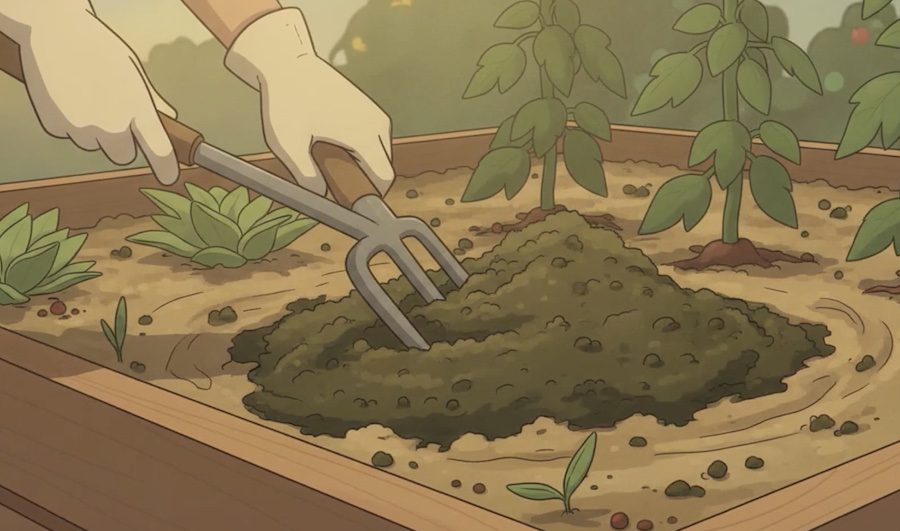
For an established bed, the standard baseline is a 1-3 inch layer of finished compost worked into the top 6-8 inches of soil once a year, typically in spring before planting or fall after your last harvest. New beds with poor native soil generally need more — 3-4 inches worked into the top 8-12 inches — to build up organic matter that isn’t there yet.
This baseline is a genuinely good starting point for most of a garden, but it’s not the final word for every bed. Treating it as one universal number glosses over something worth knowing: different vegetables actually respond very differently to how much compost they get.
Why Some Vegetables Need Less Compost
Root vegetables are the clearest exception to the standard rate. Carrots, parsnips, and other taproot crops actually prefer leaner, less chunky soil than the rest of the garden — heavy compost application can mean the root encounters resistance from unbroken organic matter as it grows, which is exactly what causes it to split and produce a forked shape instead of growing straight. If you’ve dealt with forked carrots before, this is often part of why.
Beans and peas are a different kind of exception: since they fix their own nitrogen from the air through a relationship with soil bacteria, they don’t need heavy compost amendment the way other crops do — a light application is plenty, and going overboard mostly just encourages excess leafy growth at the expense of pods.
Why Some Vegetables Need More Compost
Heavy feeders sit at the opposite end — tomatoes, peppers, squash, corn, and melons pull significantly more nutrients from the soil to fuel their size and fruit production, and genuinely benefit from being planted into the richest, most heavily amended parts of the garden. If you’re planning bed layout with limited compost to go around, this is where to prioritize it.
Leafy greens also respond strongly to more generous compost application, since the part you’re actually harvesting is the leaf itself — more available nitrogen translates fairly directly into more usable growth, unlike fruiting crops where the relationship between nutrition and yield is less direct.
How to Apply It Correctly by Bed
• Group crops by compost needs when planning your layout — keeping heavy feeders together and root crops together makes it far easier to apply different rates to different sections rather than compromising with one average amount everywhere.
• When in doubt, use the standard 1-3 inch rate — it’s a safe middle ground for beds with mixed plantings where separating by compost needs isn’t practical.
• Work compost into the top 6-8 inches of soil, not just the surface, so roots can actually reach the improved area rather than staying shallow.
• Don’t guess on an established bed that’s been heavily composted for years — a soil test can confirm whether nutrients like phosphorus have built up to excess, which is a real risk of adding compost generously year after year without checking.
One practical way to check you’re actually hitting the right depth: spread compost evenly across the bed, then measure in a few different spots with a ruler or even your hand, since compost tends to settle unevenly if just eyeballed. A bed that looks roughly covered can still be thinner in some spots and thicker in others than the target range calls for.
Related Questions
Can too much compost actually hurt my vegetables?
Yes — beyond causing forking in root crops, very high compost rates can spike phosphorus and nitrogen to levels that temporarily inhibit uptake of other nutrients, and push fruiting plants toward excess leafy growth instead of flowers and fruit.
Is homemade compost different from store-bought for this purpose?
The application rates are similar either way, though homemade compost from diverse materials often has a richer microbial community, while store-bought tends to be more consistent in nutrient content batch to batch.
Should I compost differently for a brand new raised bed?
Yes — new beds typically need the higher 3-4 inch rate worked in deeper, since there’s no existing organic matter to build on. Established beds only need a lighter yearly refresh once that foundation is in place.