QUICK ANSWER
Blueberry leaves turning yellow usually means one of two things, and the pattern tells you which: uniform yellowing that starts on older, lower leaves points to nitrogen deficiency, while yellowing between the veins (with the veins themselves staying green), especially on new growth, points to iron chlorosis — almost always caused by soil pH that’s drifted too high for blueberries to access the iron that’s already there.
Blueberry Leaves Turning Yellow: Two Different Causes
Both problems turn blueberry leaves yellow, but they look genuinely different once you know what to check, and they need completely different fixes.
Nitrogen deficiency shows up as uniform yellowing across the whole leaf, starting on the oldest, lowest leaves first, since nitrogen is mobile inside the plant — it gets pulled from older leaves to support new growth when supply runs short. New growth at the cane tips often stays green, or looks smaller and paler than it should, while the bottom of the plant fades first.
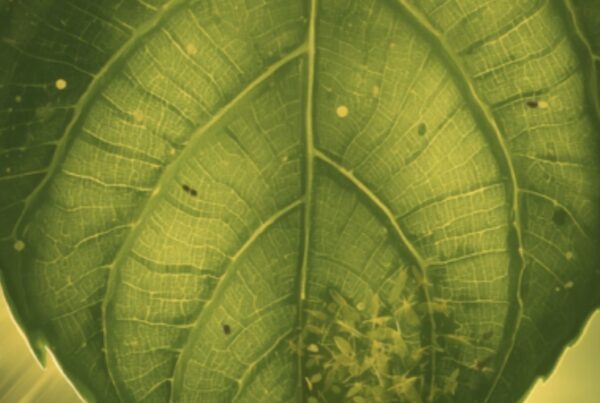
Iron chlorosis looks different: yellowing appears between the leaf veins while the veins themselves stay distinctly green, and it typically shows up on new growth first rather than old growth, since iron doesn’t move around inside the plant the way nitrogen does. This is almost never actually a lack of iron in the soil — it’s soil pH that’s climbed too high (above roughly 5.2-5.5) for the plant’s roots to access iron that’s already there.
Why Blueberries Are Especially Prone to Both
Blueberries need unusually acidic soil — ideally 4.5 to 4.8, with 5.5 as roughly the upper edge of tolerable — which is tighter than almost anything else typically grown in a home garden. That narrow window means blueberries drift into pH-related trouble more easily than most plants, making iron chlorosis a genuinely common blueberry-specific issue rather than a rare edge case.
Nitrogen deficiency shows up more often in blueberries grown in light, sandy soil, or in containers where frequent watering leaches nitrogen out of the root zone between feedings — worth keeping in mind if your bush is otherwise healthy and properly pH-adjusted but still paling from the bottom up.
How to Fix Each One
• Test your soil pH first, before assuming either cause — this single test tells you which direction to go, and guessing wrong wastes a season.
• For iron chlorosis, lower the pH with elemental sulfur or iron sulfate, worked into the soil around the root zone — this is a slow fix, often taking months to a year to fully show results.
• For a faster temporary fix on iron chlorosis, a chelated foliar iron spray green-ups the plant while the slower pH correction takes effect underneath.
• For nitrogen deficiency, apply ammonium sulfate at the standard rate for your bush size — it has the added benefit of being mildly acidifying, which works in blueberries’ favor either way.
• Don’t over-correct. More fertilizer or more sulfur than needed causes its own problems — retest before adding more if the first round doesn’t fully resolve things.
One Complication Worth Knowing About
Iron isn’t the only nutrient that gets locked up by high soil pH in blueberries — manganese behaves the same way, and it produces a nearly identical interveinal yellowing pattern that’s genuinely hard to distinguish from iron chlorosis by eye alone. The good news is the diagnostic approach and first fix are the same either way: test and correct soil pH first, since that resolves both issues at once. If yellowing persists after pH is confirmed back in the 4.5-5.5 range, that’s the signal to consider a manganese-specific foliar spray rather than continuing to treat it as an iron problem.
This is also a good reason not to guess your way through repeated foliar sprays without testing pH first — spraying iron on a plant that’s actually short on manganese (or vice versa) wastes time and money while the real underlying pH problem keeps causing new symptoms on every fresh flush of growth.
Related Questions
Could my blueberry actually have both problems at once?
Yes, and it’s fairly common — since both problems tend to show up together when soil conditions are off. Fixing the pH usually resolves the iron chlorosis and makes nitrogen more available too, so start there even if you suspect both.
Does adding iron to the soil fix iron chlorosis?
Usually not by itself — most soils already contain enough iron. The problem is almost always that high pH is locking it up, so correcting pH matters more than adding more iron to soil that likely doesn’t need it.
I have this same yellowing on my peppers too — is it the same cause?
Possibly, but peppers aren’t nearly as pH-sensitive as blueberries, so iron chlorosis is less likely there. Check the fuller pepper-specific breakdown for the causes that actually apply to peppers.