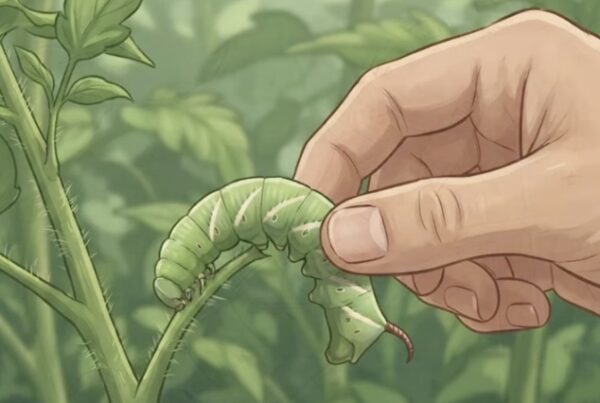
QUICK ANSWER
Cabbage worms on kale are green caterpillars that blend into the leaves and feed between inspections — by the time damage is obvious, they’ve often been there a while. A reliable natural control plan has four steps: identify the damage early, block egg-laying moths with row covers, handpick what’s already there, and reserve Bt kurstaki spray for active infestations row covers and handpicking can’t keep up with.
How to Actually Identify Cabbage Worms on Kale
Cabbage worms move slowly and are often nearly the same green as kale leaves, so look for the signs rather than the caterpillar itself: irregular holes, ragged leaf edges, and small dark droppings (frass) on or beneath a leaf, a strong clue something is feeding nearby even if you can’t spot it yet. Check leaf undersides, especially the larger outer leaves and the tender new growth near the center, since adult moths lay their pale, tiny eggs there specifically because they’re harder to notice.
Not every hole means cabbage worms — matching the actual symptom to the right pest keeps your response targeted:
• Slugs leave a shiny slime trail with ragged damage low, near the soil
• Flea beetles create many small, round holes, especially on young plants
• Aphids cluster on stems and curled new growth rather than chewing through leaf surface at all
Row Covers: Your Best First Defense
A row cover, lightweight fabric over hoops or draped directly on the crop, physically blocks adult moths from reaching the plant. Timing matters: install it soon after planting, before moths have had access, since a cover can’t solve a problem that’s already underneath it. Inspect the seedlings and soil first, removing any visible caterpillars, eggs, and nearby weeds that could hide pests, then secure every edge with soil, clips, or boards; even a small gap gives moths an easy way in.
A cover left in place needs occasional attention, not just a one-time install. UNH Extension specifically recommends checking underneath periodically for moisture buildup and temperature spikes, not just pest activity — a tightly sealed cover can trap humidity against the foliage, which invites its own problems even while it’s successfully keeping moths out. Since kale doesn’t need insect pollination to produce leaves, it’s especially well-suited to staying covered for the whole season, but that makes periodic checks even more worth doing, not less, since the cover might otherwise stay sealed for weeks at a stretch. Open briefly to harvest, check, or air things out, then close it right back up.
Handpicking: Effective for Small Gardens
When a cover isn’t practical, walk the planting regularly and check both sides of every leaf, removing pests from the garden entirely rather than just dropping them nearby. A short, frequent check beats waiting until damage is obvious. Use a deliberate pattern: outer leaves first, undersides, then the center of the plant, checking along the midrib specifically, since a green caterpillar can disappear right against that structure. Check neighboring plants too, since moths don’t respect the boundaries of one bed.
Handpicking pairs naturally with row covers: clear pests before the cover goes on, then keep checking each time you open it, interrupting the pest at more than one stage instead of relying on a single treatment after damage has spread.
When to Use Bt Kurstaki
Bt kurstaki (Bacillus thuringiensis kurstaki) is a naturally occurring bacterium that disrupts a caterpillar’s digestion once eaten. It’s not a general insecticide and won’t touch aphids, flea beetles, or slugs, so it only makes sense once you’ve confirmed active, feeding caterpillars are the actual problem. Apply it when handpicking can’t keep up, following the product label for mixing and timing, with thorough leaf coverage since it only works if the caterpillar actually eats treated foliage. Young caterpillars are easier to control than large ones, another reason early inspection matters more than waiting for obvious leaf loss.
End-of-Season Cleanup
Removing heavily infested crop residue and nearby weeds at season’s end clears hiding places and gives you a cleaner start for early row cover installation next time, though it won’t guarantee prevention on its own, since adult moths can still arrive from outside the garden.
Related Questions
How do I tell cabbage worm eggs from other insect eggs?
They’re typically small, pale, and laid singly or in small groups on the underside of leaves. If you’re seeing eggs on tomatoes or cucumbers instead of cabbage-family plants, it’s likely a different pest.
Will a row cover work if eggs are already on the plant?
No — a cover blocks moths from laying new eggs, but it can’t remove what’s already underneath it. Inspect and clear the plant first, then cover.
Is Bt kurstaki safe to use on kale right up to harvest?
Yes, it’s commonly used on edible crops and specifically targets caterpillars, making it one of the more selective organic controls available. It should still be a targeted response to active feeding, not a routine preventive spray.