Your hardiness zone tells you which perennials, shrubs and trees can survive winter where you live. It doesn’t tell you when to plant; your local frost dates do. Enter a U.S. ZIP code below to get both: your zone from the 2023 USDA Plant Hardiness Zone Map, plus frost dates, season length and a planting calendar from the NOAA weather station nearest you. Canadian postal codes work too.
Zone Finder
Growing Zone Finder
What's your growing zone?
Enter a U.S. ZIP code or Canadian postal code to see your zone, local frost dates, and what to plant when.
–
Zone 1 · coldestZone 13 · warmest
Up next
The minimum soil temperature, at planting depth, for seeds to sprout. Seeds sprout slowly at the minimum — tomato seed at 50°F (10°C) can take over 40 days — so a few degrees warmer is better.
More from The Infinite Harvest
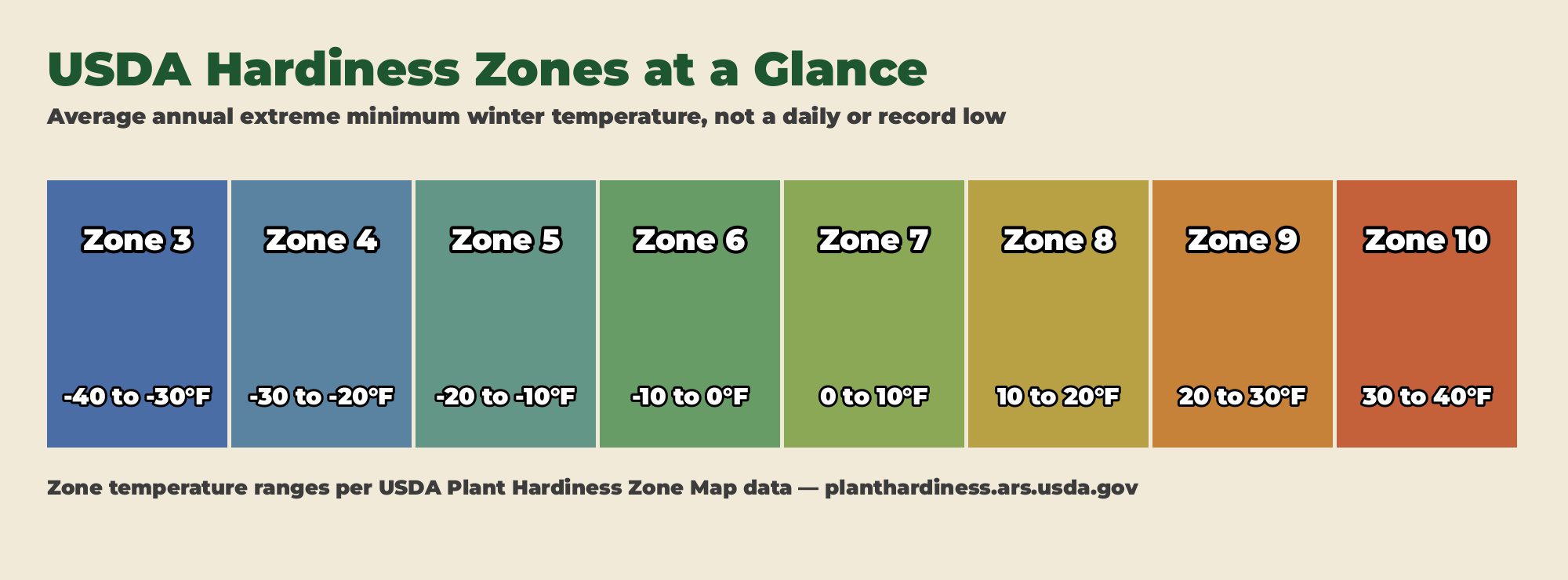
Click the chart to download it.
What Each Zone Actually Looks Like
Zone numbers alone don’t mean much until you can picture the winter behind them. Here’s what the most common zones actually cover:
Zone 6
-10°F to 0°F average annual extreme minimum. Covers much of Ohio, Pennsylvania, Missouri, Kansas, southern New England, and the inland Pacific Northwest.
Zone 7
0°F to 10°F average annual extreme minimum. Covers Virginia, Tennessee, Oklahoma, northern Texas, and the Pacific Northwest coast.
Zone 8
10°F to 20°F average annual extreme minimum. Covers Georgia, the Carolinas, much of Texas, and western Oregon and Washington.
Zone 9
20°F to 30°F average annual extreme minimum. Covers North Florida, the Gulf Coast, south Texas, central California, and southern Arizona.
Zone temperature ranges per the USDA Plant Hardiness Zone Map data.
Zone Finder FAQ
What's the difference between a hardiness zone and a frost date?
Your hardiness zone is based on the average coldest winter night in your area from 1991 to 2020, so it tells you which perennials, shrubs and trees can survive your winters. Frost dates tell you when the growing season starts and ends, which is what you need for planting vegetables. The Zone Finder gives you both: your zone from the USDA Plant Hardiness Zone Map, and frost dates from the NOAA weather station nearest you.
Why did my zone change with the 2023 map?
The 2023 USDA map uses weather data from 1991 to 2020, while the previous 2012 map used 1976 to 2005, so many areas shifted by a half zone. A new zone doesn’t mean your garden has to change. USDA notes that plants already thriving in your yard don’t need to be removed.
What does the 'safer' last frost date mean?
The typical date is the point when there’s still a 50% chance of a later frost. The safer date is when that chance drops to about 1 in 10. Both come from NOAA’s 1991–2020 climate normals. For frost-tender crops like tomatoes and peppers, waiting until the safer date lowers your risk of losing transplants to a late cold snap.
How accurate are these frost dates for my yard?
They’re long-term averages from the nearest NOAA weather station, not a forecast. Your yard can run colder or warmer than the station: low spots where cold air settles often frost earlier, while sheltered spots near a south-facing wall stay warmer. Always check the local forecast before setting out tender plants, and browse our seasonal and weather guides for frost protection tips.
When should I start seeds indoors?
It depends on the crop. Tomatoes, for example, need about 6 to 8 weeks from sowing to transplant size, according to UNH Extension. Count back from your last frost date, or let the Zone Finder’s planting calendar do the math for you. Our seed starting guides cover the rest, including how to prevent damping off.
Why does soil temperature matter if I know my frost date?
Seeds need warm enough soil to sprout, and soil often warms later than the air. According to WSU Extension, lettuce can sprout in 35°F (2°C) soil, while beans, squash and cucumbers need at least 60°F (16°C). Seeds sown into cold soil sprout slowly or rot, so a soil thermometer is worth having.
I'm in Canada. Can I use USDA zones?
Canada has its own zone system, which factors in more than winter cold, including rainfall, snow depth and wind. The two systems don’t convert cleanly: Natural Resources Canada notes that Canadian zone 4a overlaps USDA zones 3a through 7a. Check which system a plant tag or seed catalog is using, and look up your exact Canadian zone with NRCan’s free municipal tool.
What's the difference between my hardiness zone and my growing season?
Your hardiness zone is about winter survival for perennials, shrubs and trees — it’s based on the coldest night your area typically sees. Your growing season is a completely separate measure: the number of frost-free days between your last spring frost and first fall frost, which is what determines how long you have to grow annual vegetables. Two gardens in the same zone can have very different season lengths depending on elevation, latitude and local climate, so check both numbers rather than assuming they track together.